Skills needs in working life are changing rapidly due to digitalisation, artificial intelligence, the green transition and demographic change. Access to a skilled workforce is crucial for regional vitality, business competitiveness and the effective functioning of public services. This is why continuous learning must be developed through collaboration between education providers, working life, employment services and guidance professionals.
The aim of continuous learning is to ensure that people of working age have opportunities to update their skills, change careers and respond to the evolving needs of the labour market throughout their working lives. It is not only about providing individuals with opportunities to develop their skills, but also about allocating education resources appropriately. The skills of the existing workforce can be supplemented and renewed instead of trying to address skills shortages solely through degree education.
Reforms open up new skills pathways
The operating environment for continuous learning has changed significantly in recent years. The launch of the new employment areas, the reform of the higher education vision, the study voucher pilot and opportunities to study while receiving unemployment benefits have created new opportunities for skills development. At the same time, digital services such as Opin.fi, Studyinfo and Osaamispolku are making education and training opportunities more visible and accessible than before.
The reforms enable more flexible skills pathways. Skills can be developed at different levels of education by combining studies offered by different education providers and progressing step by step towards new job roles or professions.
However, simply increasing the supply of education and training or making it available through digital services is not enough. Those who need education and training the most may find it difficult to identify suitable options or assess which type of training would best support their goals. Unemployed people, immigrants, international students and people who participate less frequently in education and training, in particular, need guidance, advice and personalised support.
Digital services therefore cannot replace guidance. Alongside them, easily accessible services and service pathways jointly developed by different organisations are needed. From the customer’s perspective, what matters is not which organisation provides the service, but whether they receive the right support at the right time.
From working-life cooperation to joint foresight
Cooperation with working life no longer means simply tailoring education and training to the needs of individual companies. Joint foresight of skills needs, building a shared regional situational picture and coordinating education and training provision are becoming increasingly important.
Employers, employment services, higher education institutions, vocational education providers, liberal adult education providers and guidance services need to work together to find solutions that ensure skills development services reach the right people at the right time. A shared situational picture helps identify what skills already exist in the region, where skills shortages occur and what changes education and training provision should respond to.
The impact of continuous learning therefore cannot be assessed solely on the basis of the number of education and training opportunities provided. Equally important are how well the provision matches actual needs, how accessible it is and whether it can form meaningful skills and service pathways for people in different life situations.
The JOE project strengthens the foundation for collaboration
During the JOE project, many reforms affecting continuous learning have progressed simultaneously. The project has provided higher education institutions, vocational education providers, liberal adult education providers, employment areas and guidance services with a forum for building a shared understanding.
The project has strengthened cooperation between education providers, employment services and guidance professionals and identified target groups whose support requires expertise from several different actors. For example, the needs of immigrants, international students and highly educated unemployed people often extend beyond the services of a single organisation. A customer may simultaneously need skills identification, education and training guidance, language skills development, employment support and connections with working life.
When service pathways are developed together, transitions between services can be made smoother and the threshold for entering education and training can be lowered. At the same time, situations in which customers fall between different services can be prevented.
The future of continuous learning cannot be secured through individual education and training programmes, digital services or reforms alone. Real impact is achieved only when these elements form a coherent and effective whole from the customer’s perspective. The JOE project has strengthened this collaboration and laid the foundation for operating models that can continue after the project itself has ended.
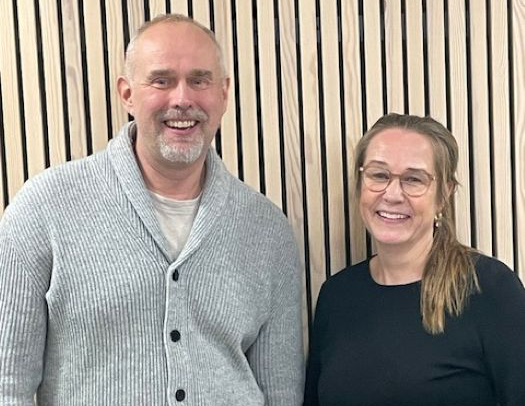
Katja Mäkinen& Timo Halttunen
Katja Mäkinen
Erityisasiantuntija, Jatkuvan oppiminen / Senior Advisor, Continuous Learning
Yhteisö ja kumppanuussuhteet / Community and Collaboration
Yhteiset palvelut / Corporate Services
Turun ammattikorkeakoulu / Turku University of Applied Sciences
Joukahaisenkatu 3, FI-20520 Turku
Puh. / Tel. +358 50 598 5617
Katja.makinen@turkuamk.fi