
What explains the fact that Finland has not returned to a growth path since 2008? And, perhaps more importantly, what could we do now, and what kind of future do we dare to believe in? These questions were discussed at the “Bold Growth for Southwest Finland” event held in late September.
The growth event, organized by Business Turku, the City of Turku and the Southwest Finland Foresight Academy, brought together more than 65 participants from regional companies, development organizations and education providers. Among the speakers, Sitra’s Chief Economist Matti Paavonen examined the key drivers of economic growth, including labor productivity, workforce skills, and the role of RDI and innovation. Timo Aro, Director of Strategy for the City of Turku, provided a regional perspective and highlighted the significance of geopolitics in Western Finland. Vesa Taatila, President and CEO of Turku University of Applied Sciences, reflected on young people’s confidence in the future and the strengthening of innovation capabilities. (Presentation materials can be found at the end of this article.)
 The networking event is organised as part of the EU co-funded InnoTurku project, which supports companies in growth, internationalisation and RDI collaboration.
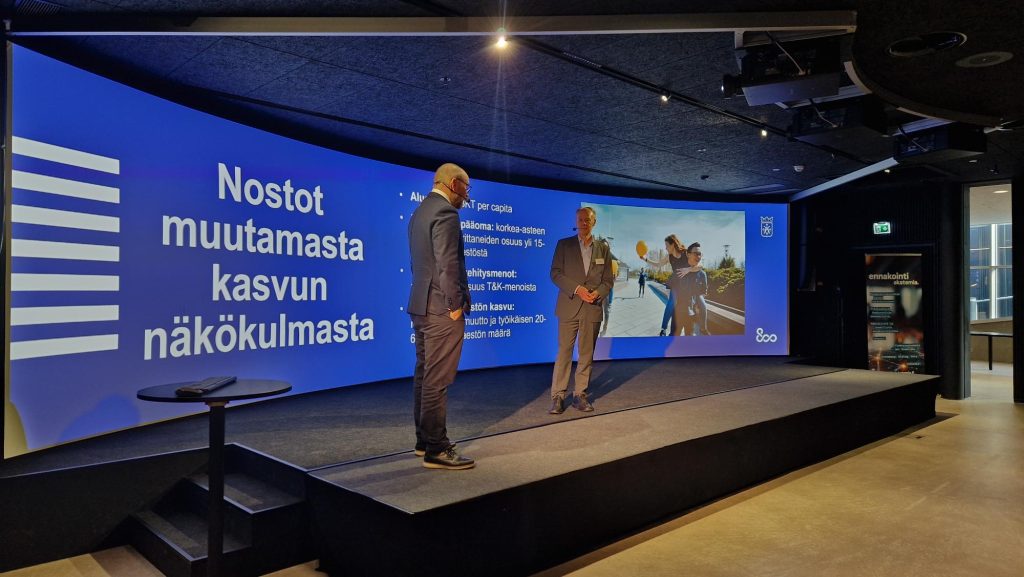
Human Capital Determines Growth
Matti Paavonen from Sitra introduced the audience to the Growth Atlas 2026 publication and outlined the key components of economic growth. The Growth Atlas consists of contributions from multiple authors and includes 231 proposals for improving Finland’s economic performance. Finland has experienced virtually no economic growth since 2008.
According to Paavonen, comparisons with peer countries suggest that the stagnation cannot primarily be explained by a lack of investments, nor yet by shortcomings in workforce skills. However, human capital remains the most important engine of economic growth, accounting for an estimated 50–70% of economic growth.
“Finland has fallen behind in education. The share of highly educated people has declined, and those born between 1975 and 1979 are currently the most highly educated age group. The goals set in the Government Programme and the Higher Education Vision to increase the number of higher education graduates are critically important. Economic success is built on people’s skills, work ability, creativity and capacity to learn.”
There is also the question of workforce availability. Since 2010, the size of the working-age population has declined, and immigration has helped compensate for this trend. The stock of human capital would decrease significantly if a “closed borders” immigration scenario were to materialize. Without the strong immigration growth seen in recent years, Finland’s population would already be around 100,000 people smaller.
“Growth and innovation emerge in companies that succeed in adapting to a changing operating environment. These companies are often new and make effective use of new technologies. What successful companies have in common is growth in personnel and a long-term commitment to developing employee skills. Support should be directed towards these companies, and also towards companies that have not yet been established,” Paavonen emphasized.
The Growth Atlas also proposes the idea of a national growth pact, referring to a commitment that extends across electoral terms to support economic growth. For example, Finland aims to increase RDI investments despite extensive public spending cuts, with the goal of raising RDI expenditure to 4% of GDP.
RDI Expenditure in Southwest Finland Is Growing: Let’s Keep It That Way
Timo Aro began by reviewing population growth trends in Southwest Finland. The region has recently surpassed the milestone of 500,000 inhabitants and ranks second among Finnish regions in population growth after Uusimaa. Net immigration has averaged approximately 3,400 people annually during the 2020s, which is particularly significant from the perspective of human capital. The proportion of highly educated residents in the region has now risen to 34%, representing growth of more than six percentage points over the last 15 years.
“Between 2019 and 2024, RDI expenditure in Southwest Finland increased by as much as 70%. Our region had fallen behind but has been catching up rapidly. Strengthened cooperation between universities and universities of applied sciences has clearly contributed to this progress. We must not allow this positive trend to reverse, because it creates a strong foundation for new investments, innovation and jobs,” Aro stressed.
The conditions for future growth are also increasingly shaped by geopolitical and geoeconomic factors. Southwest Finland’s western location and international connections strengthen future growth opportunities. Export markets and logistical accessibility are becoming even more important. Population growth within the region is concentrated especially in the Turku region, while the future vitality of other parts of Southwest Finland also requires attention.
Industries Are Transforming: Logistics, Optics and Real Estate Featured in the Panel
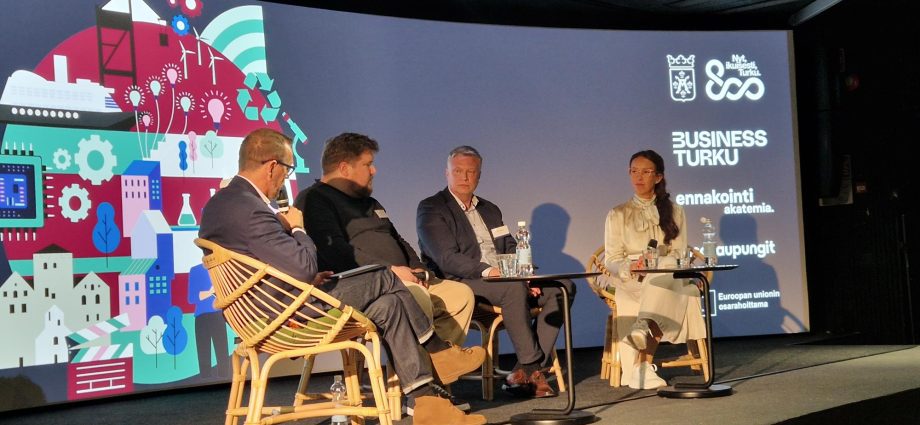
The business panel explored industry transformation from the perspectives of logistics, the optical sector and the real estate industry. Participants included Erik Rousi (Aurafleet), Tuulia Alanen-Brandt (Tarume) and Juha Raitanen (Sofitum). The discussion was moderated by Tapani Mylly from Business Turku.
A common theme throughout the discussion was companies’ ability to renew themselves and take advantage of new technologies in a changing business environment. Competitiveness increasingly depends on expertise, customer understanding and the continuous development of personnel. The panelists emphasized that growth requires the courage to rethink operating models, embrace experimentation and strengthen collaboration between education, research and industry.
Shared Message: Competence Makes the Difference
Vesa Taatila, President and CEO of Turku University of Applied Sciences, emphasized the importance of skills, adaptability and collaboration in strengthening regional competitiveness.
His key message was captured in the idea that skilled people change the world. At the same time, he highlighted that success in a changing environment requires continuous learning and the ability to evolve. This was illustrated by a statement shown during his presentation:
“The only easy day was yesterday.”
The concluding commentaries also examined future growth from the perspective of startups and entrepreneurship. Elias Savonlahti, Co-founder of Turku Startup Hub, and expert India Claudino highlighted the importance of internationalization, entrepreneurial culture and innovation ecosystems for regional competitiveness. According to them, growth emerges in environments where talent, companies, research and funding come together, and where new ideas are given the opportunity to develop into businesses.
Recommended Reading
Sitra’s Growth Atlas 2026:
Growth Atlas 2026 – Sitra
Further Information
- Anneli Frantti, City of Turku
- Sanni Kiviniemi, Novida
- Esa Högblom, Regional Council of Southwest Finland
Programme and Presentation Links
13:15 Opening of the Event
- Opening remarks by Anna Kivinen, Director of Innovation, City of Turku
- Speakers:
- Matti Paavonen, Chief Economist at Sitra, introduced the themes of the Growth Atlas publication and discussed innovation, barriers to growth and the concept of a Growth Pact.
- Sitra’s Growth Atlas Meets Southwest Finland
- Timo Aro, Director of Strategy for the City of Turku, commented on how growth currently looks in Southwest Finland and what future prospects may lie ahead.
Industry Innovators on Stage
- Aurafleet is transforming the logistics sector: Erik Rousi, CEO
- Tarume is transforming the optical sector: Tuulia Alanen-Brandt, CEO and Creative Director
- Sofitum is transforming the real estate sector: Juha Raitanen, CEO
- Business panel moderated by Tapani Mylly, Marketing Director, Business Turku
Commentaries
- Vesa Taatila, President and CEO, Turku University of Applied Sciences: Rate of Change
- Elias Savonlahti, Co-founder, Turku Startup Hub, and India Claudino, Expert (presentation in English)